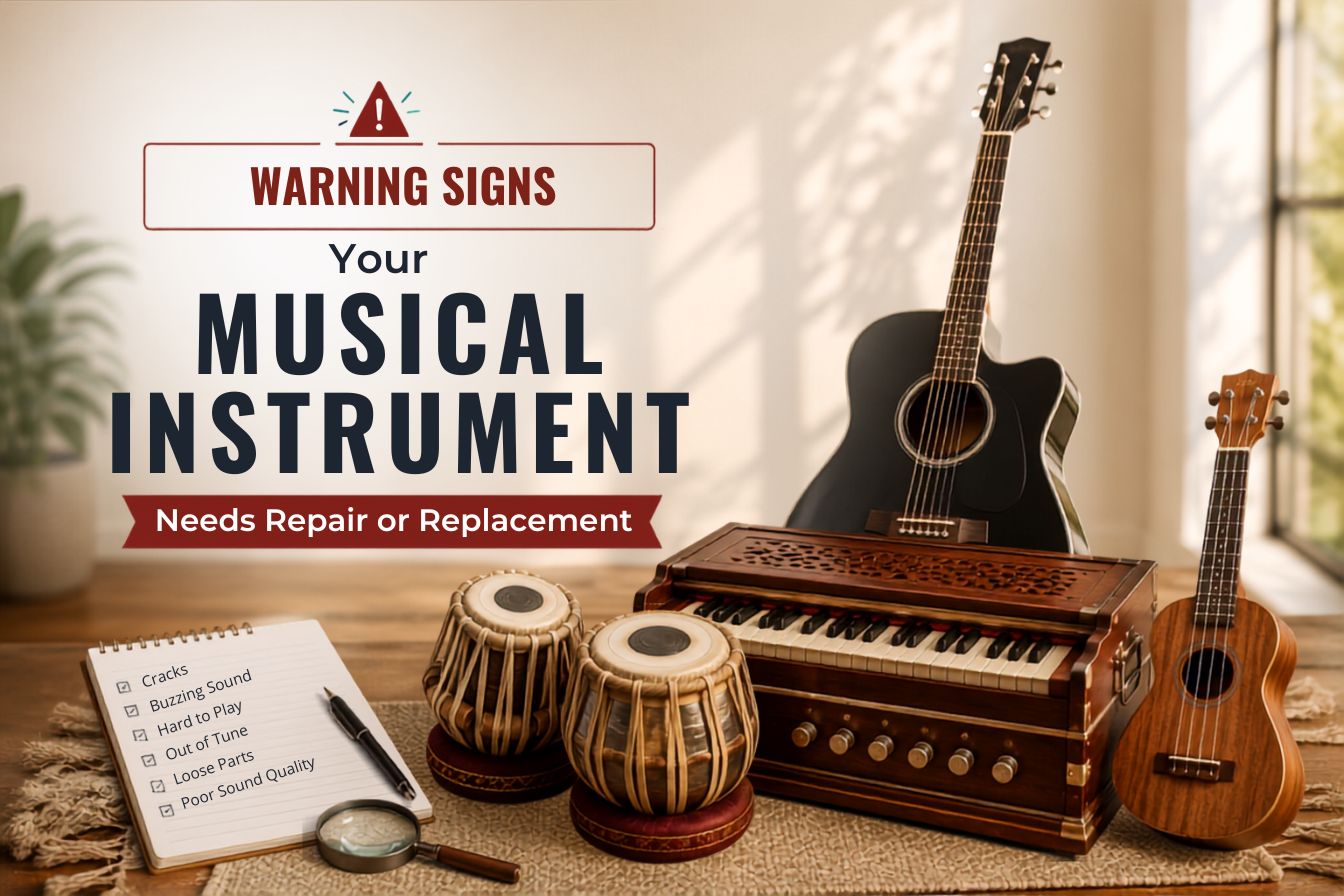
5 Warning Signs Your Musical Instrument Needs Repair or Replacement
A musical instrument can stay with you for years, but regular use slowly affects its sound, structure, and playability.
Whether you play Indian musical instruments at home, perform professionally, teach music, or practice daily, knowing when an instrument needs attention can prevent minor problems from becoming costly repairs.
Many musicians continue playing an instrument even when its tone, tuning, or response starts changing. Sometimes a professional repair can restore its original performance. In other cases, buying new instrument options may be more practical than spending repeatedly on repairs.
This guide explains the warning signs you should watch for, how to maintain your instrument, and when replacement may make better financial and musical sense.
Why Is It Important to Maintain Musical Instruments?
Every instrument depends on precise components working together. Strings need the correct tension. Wood needs protection from excessive moisture and dryness. Drumheads require proper tuning. Wind instruments depend on clear airflow.
This is particularly important for Indian musical instruments, where materials such as natural wood, metal, strings, leather, and handcrafted components can directly influence tonal quality.
Regular maintenance can help you:
- Preserve the natural tone of the instrument
- Improve tuning stability
- Prevent avoidable structural damage
- Make playing more comfortable
- Extend the instrument’s usable life
- Reduce the frequency of expensive repairs
- Spot worn-out parts early, before they start causing trouble elsewhere in the instrument.
Maintenance is equally important for a handcrafted instrument in India because small changes in its physical condition can influence its unique acoustic character.
Warning Signs Your Musical Instrument Needs Repair or Replacement
Not every scratch or tuning problem means you need a replacement. However, repeated or worsening problems deserve attention.
Here are five important warning signs.
1. Intonation and Tuning Issues
One of the earliest signs of an instrument problem is an inability to remain properly tuned.
Tuning Issues
If you tune your instrument correctly but it quickly goes out of tune, check it carefully. Frequent tuning problems may come from worn strings, loose tuning components, damaged bridges, poor string seating, or changes in the instrument’s body.
For example, a sitar that repeatedly loses tuning may have issues with its strings, tuning pegs, bridge, or structural alignment. A harmonium may show pitch inconsistencies due to reed or airflow problems.
Look for signs such as:
- Notes sounding sharp or flat after tuning
- Strings losing tension unusually quickly
- Loose or slipping tuning pegs
- Different notes sounding inconsistent
- Difficulty maintaining pitch during a performance
Start by replacing consumable components such as strings when appropriate. If the problem continues, ask an experienced repair professional to inspect the instrument.
Persistent tuning problems across several components may also indicate that replacement is becoming a better option.
2. Physical Damage That Affects Sound or Structure
Small cosmetic marks are common on regularly used musical instruments. Cracks, warping, loose joints, damaged bridges, and broken fittings are different because they can affect performance.
Check your instrument for:
- Cracks in wooden sections
- Warped surfaces
- Loose joints or fittings
- Broken tuning pegs
- Damaged strings
- Dented metal components
- Torn or excessively worn drumheads
- Damaged bridges or frets
- Corrosion around metal parts
A visible crack may appear minor but can change vibration and resonance. Structural damage can also spread when the instrument remains under string tension.
This is especially relevant for a handcrafted instrument in India, where individual parts may have been shaped and fitted specifically for that instrument.
Get structural damage assessed early. A skilled repair specialist may be able to restore the instrument before the problem becomes permanent.
3. Strange Noises or Buzzing
Unexpected buzzing, rattling, clicking, or vibrating sounds should not be ignored.
Buzzing can have several causes. A string may be touching a fret incorrectly. A screw or fitting may have become loose. A bridge may have shifted. Internal parts may also vibrate when they should remain secure.
Pay attention when:
- Buzzing occurs only on certain notes.
- Rattling becomes louder at specific frequencies.
- A previously clear tone develops unwanted vibration.
- The sound remains after replacing strings or making basic adjustments.
For string instruments, fret wear and bridge alignment are common areas to inspect. For percussion instruments, check the membrane, straps, tuning blocks, and shell. Avoid making major structural adjustments yourself unless you have the right experience. A poorly handled repair may end up creating new issues instead of fixing the original one.
4. Difficulty in Playing and Airflow Issues
An instrument should respond predictably to normal playing technique. If playing suddenly requires more physical effort, the instrument itself may need attention.
Difficulty in Playing
String players may notice unusually high action, uncomfortable fret response, stiff tuning pegs, or uneven string tension. Keyboard players may experience sticking or poorly responding keys.
A change in playability matters because musicians sometimes adjust their technique to compensate for a damaged instrument. Over time, that can make practice uncomfortable and affect performance.
Airflow Issue
Airflow is essential in harmoniums, flutes, shehnais, and other wind or reed-based instruments.
Common warning signs include:
- Air leaking from unexpected areas
- Weak notes despite normal playing pressure
- Uneven volume
- Delayed sound response
- Unusual hissing
- Bellows requiring more effort than before
In a harmonium, for example, damaged bellows or internal leakage can reduce pressure. Reed problems may also affect individual notes.
If cleaning and routine care do not solve the issue, professional inspection is the safer choice.
5. Performance and Economic Red Flags
Sometimes an instrument still works, but keeping it functional no longer makes practical sense. This is where you should compare repair cost with replacement value.
Consider buying new instrument options when:
- The same problem returns after several repairs.
- Replacement parts are difficult to source.
- Repair costs approach the price of a suitable new instrument.
- Structural damage has permanently changed the tone.
- The instrument can no longer support your current playing level.
- Reliability has become a problem during performances.
However, age alone is not a reason to replace an instrument. A well-maintained older instrument can sound excellent. The decision should depend on condition, repairability, sound quality, playing requirements, sentimental value, and total cost.
Special Warning Signs in Percussion Instruments
Tabla, mridangam, drums, dholak and similar percussion instruments need their own inspection routine.
Common warning signs include:
- Cracked or damaged drumheads
- Loose straps or tuning hardware
- Uneven tension
- Reduced resonance
- Unwanted ringing
- Buzzing during strokes
- Difficulty reaching the correct pitch
Humidity can also affect natural drumheads. Therefore, store percussion instruments in stable conditions and avoid prolonged exposure to moisture or excessive heat.
If tuning adjustments no longer restore the expected tone, consult a percussion instrument specialist.
Musical Instrument Maintenance Tips
Good maintenance can delay both major repairs and replacement. A simple routine is often enough.
1. Clean the Instrument After Playing
Remove dust, moisture, fingerprints, and residue with material-appropriate cleaning products. Avoid harsh household chemicals.
2. Store It Properly
Keep the instrument in a suitable case or protected area. Avoid direct sunlight, excessive heat, damp rooms, and sudden temperature changes.
3. Inspect Consumable Parts
Check strings, reeds, drumheads, straps, corks, and other frequently used components. Replace them before severe wear begins affecting performance.
4. Keep Suitable Accessories Available
When you shop musical accessories, choose products compatible with your instrument. Correct strings, cleaning materials, cases, covers, tuning tools, and replacement parts can make routine care easier.
5. Schedule Professional Inspections
If you play regularly, occasional professional servicing can identify problems that are difficult to see at home.
Proper care is particularly valuable for Indian musical instruments because traditional construction techniques and material combinations may require specialized repair knowledge.
Repair or Replace: How Do You Decide?
Before making the final decision, ask three questions.
Can the instrument be restored properly?
If a professional repair can return the original sound and playability, repairing may be worthwhile.
How much will the repair cost?
Compare the complete repair estimate with the cost and expected lifespan of a replacement.
Will the instrument still meet your needs?
A beginner instrument may no longer suit an advanced performer. In that situation, replacement can also be an upgrade rather than simply a response to damage.
If you are considering a new handcrafted instrument in India, examine craftsmanship, material quality, tonal consistency, comfort, after-sales support, and availability of replacement parts before purchasing.
Final Thoughts
Your instrument often gives warning signs before a serious failure occurs. Changes in tuning, visible damage, unwanted noises, poor playability, airflow problems, and repeated repair expenses all deserve attention.
Regular maintenance helps Indian musical instruments retain their tonal character and remain enjoyable to play. More importantly, early inspection gives you time to decide whether a simple repair or replacement offers the best value.
When repair is no longer practical, compare suitable musical instruments, understand their construction, and choose one that matches your playing style and experience. Also remember to shop musical accessories that support correct storage and long-term maintenance.
Frequently Asked Questions
How do I know if my musical instrument needs professional repair?
Repeated tuning problems, cracks, buzzing, loose components, poor response, or major changes in tone are strong reasons to seek professional inspection.
Is repairing an old instrument better than buying a new one?
It depends on the instrument’s condition, value, repair cost, and expected performance after repair. High-quality or sentimental instruments may justify restoration, while repeated expensive repairs can make replacement more practical.
How often should musical instruments be serviced?
There is no single schedule for every instrument. Frequently played instruments should be inspected regularly, while professional servicing depends on the instrument type, playing frequency, climate, and condition.
Can humidity damage Indian musical instruments?
Yes. Excessive humidity or dryness can affect wood, natural drumheads, strings, adhesives, and other materials. Stable storage conditions can reduce these risks.
What should I check before buying a new musical instrument?
Check sound quality, construction, comfort, tuning stability, materials, repair support, spare-part availability, and suitability for your skill level. For handcrafted instruments, also consider the maker’s experience and craftsmanship.