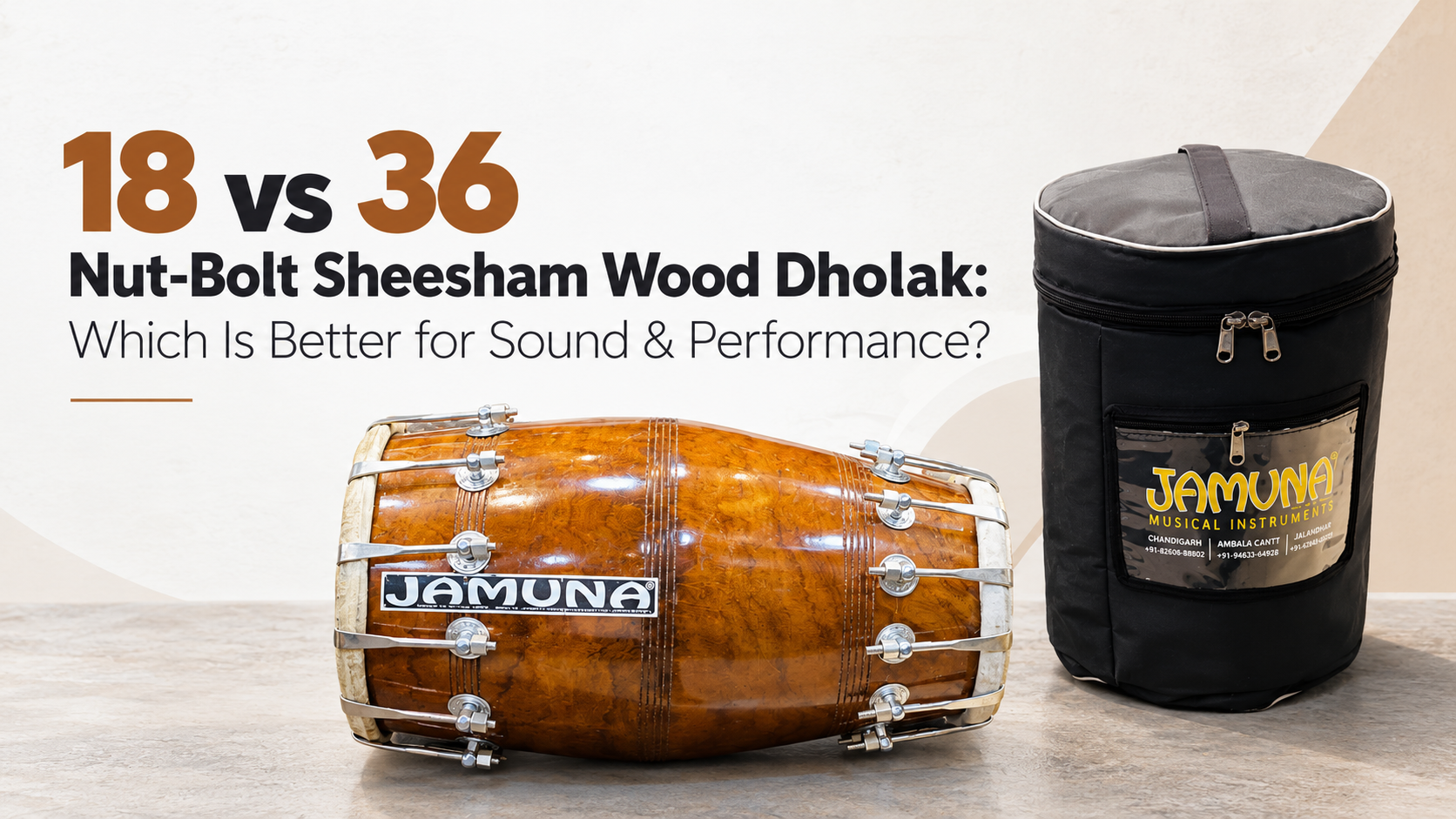
18 vs 36 Nut-Bolt Sheesham Wood Dholak: Which Is Better for Sound & Performance?
At a glance, two dholaks may look much the same, but they can feel and sound very different once you start playing. If you’re comparing a Sheesham Wood Dholak with 18 or 36 nut bolts, pay attention to the bass, treble, and how easily it tunes. The wooden shell, leather heads, and how the drum sits in your lap all play a part in its sound.
It’s tempting to assume that more bolts mean a better drum, but the number alone tells you very little. At Jamuna Music, you’ll find handmade sheesham dholaks alongside wooden concert models. Here’s what to pay attention to before buying one.
18-Bolt vs 36-Bolt Dholak: Is One Actually Better?
Not because of the bolt count. A well-made 18-bolt dholak can have a lovely bass note and crisp treble when its shell, leather heads, and tuning are right. A 36-bolt drum has a different hardware layout. Some models offer more adjustment points; others use fittings that work in pairs.
An 18-bolt setup may be easier to get used to when you’re learning, but experienced players use both types. Put the numbers aside for a moment and notice how each drum responds under your hands.
What Do 18 and 36 Nut Bolts Mean for Tuning?
The metal fittings let you adjust the tension of the drumheads with a suitable spanner. Small changes can affect the pitch and the way the drum responds. One detail that’s easy to miss: a ’36 nut-bolt’ label doesn’t necessarily mean 36 separate tuning adjustments.
How an 18 Nut-Bolt Dholak Tunes
An 18-bolt system can give you enough control for practice, bhajans, and recording. What matters most is whether the fittings turn smoothly and hold their adjustment.
What Changes with 36 Nut Bolts?
A 36-bolt dholak generally has more hardware around the shell, but the way it tightens depends on the model. Look at the actual tensioning system before assuming it will be easier to tune more precisely.
Sheesham Wood vs Mango Wood: How Do They Compare?
Both sheesham and mango wood are used in traditional Indian dholaks. The wood is worth looking at, but it doesn’t tell you everything about the finished instrument.
Sheesham Wood Dholak
Sheesham is a dense hardwood with a distinctive natural grain. Many musicians like its solid feel and traditional look. With a well-built shell and properly fitted leather heads, it can produce a satisfying low note and clear, lively treble strokes.
Mango Wood Dholak
Mango wood is another familiar material in dholak making. When the shell and heads are prepared well, a mango wood drum can feel responsive. Its weight and tone still depend on the drum’s size, shell thickness, and construction.
If possible, listen to both woods before making up your mind. A well-tuned mango dholak may suit you better than a sheesham drum that needs adjustment, and the reverse can be true as well.
Will a 36-Bolt Dholak Give You Better Bass and Treble?
Not automatically. The larger head gives you the bass sound, while the smaller head produces sharper treble strokes. The leather, head size, tension, shell dimensions, and your playing technique all shape what you hear.
What to Listen for in the Bass
Play a few steady strokes on the bass side. You’re listening for a full, controlled low note, not just a loud thump. Rattling fittings or excessive buzzing are worth checking.
What to Listen for in the Treble
Quick finger strokes on the smaller head should come through clearly. If the notes sound dull or uneven, check the tuning before deciding the wood or bolt layout is the problem.
For a useful side-by-side test, ask the same person to play the same rhythm on both drums in the same room. If you’re making recordings, keep the microphone setup the same too. You’ll hear the differences much more clearly.
A Simple Way to Tune a Nut-Bolt Dholak
A small adjustment can change the sound quite a bit, so there’s no need to rush. Follow the instructions for your particular fittings and work gradually.
- Look over the heads: Check for tears, loose fittings, and uneven tension.
- Get the right spanner: It should fit the nuts firmly without slipping.
- Make small adjustments: If the design allows, work evenly around the head rather than tightening one spot.
- Play a few strokes: Listen to the bass and treble after every small change.
- Don’t force a fitting: Overtightening can damage the leather head or hardware.
A drum with more individually adjustable fittings can take longer to tune. Small changes and a careful ear are more useful than trying to finish quickly.
Rope-Tuned vs Nut-Bolt Dholak: What’s Different?
A rope-tuned dholak relies on cords and tensioning rings. A nut-bolt drum uses metal hardware instead. Some players enjoy the traditional feel of rope tuning; others find direct access to the nuts more convenient. Either can sound good when it’s properly set up and looked after.
Which Dholak Works for the Music You Play?
Beginners and Music Students
If you’re learning your first rhythms, start with a drum that’s comfortable to hold and responds evenly on both heads. An 18-bolt model can be a practical starting point, though the fit and sound matter more than the number.
Bhajan and Kirtan
For bhajan and kirtan, the dholak should sit comfortably alongside the singing and harmonium. A warm bass, clear treble, and sensible volume help the rhythm support the music. A properly tuned sheesham model can work well here.
Studio Recording
In the studio, small noises stand out. Listen for rattles and shifting pitch; clean bass and treble strokes make recording easier. Some sheesham models are intended for studio use.
Stage and Concert Performances
On stage, sound projection and comfort both matter. Try the 18-bolt and 36-bolt layouts if you can, and pay attention to how the drum feels over a longer playing session.
What to Look for Before Buying a Handmade Dholak
Start with the wooden shell. Look closely for cracks, rough edges, or uneven finishing. Then check that the leather heads sit properly against the body.
Check that the metal fittings sit firmly and adjust as intended. Think about the weight, size, and sound too. Buying online? Ask for a recording of the model you’re interested in.
18 vs 36 Nut-Bolt Dholak: Price Comparison
Here’s what a few models cost. These are different instruments, so it’s worth looking at the wood and fittings alongside the number of bolts.
| Jamuna Music model | Configuration | Selling price |
| Stainless Steel Patti Studio Dholak | 18 nut bolts | ₹6,990 |
| Handmade Sheesham Natural Polish Dholak | 18 nut bolts | ₹9,500 |
| Special Concert Quality Dholak | 36 nut bolts | ₹8,500 |
| Concert Quality Professional Dholak | 36 nut bolts | ₹9,490 |
Sheesham Wood Dholak Price Comparison
If sheesham wood is your priority, these are the models identified as sheesham or shisham in the catalog.
| Sheesham model | Regular price | Selling price |
| Long Cell, Natural Finish | ₹11,000 | ₹8,500 |
| Handmade, Natural Polish | ₹11,000 | ₹9,500 |
| Studio, Brown Polish | ₹10,990 | ₹9,990 |
| Studio, Natural Polish | ₹10,990 | ₹9,990 |
| Soft Tone, Studio Quality | ₹13,900 | ₹11,900 |
| Red Sheesham, Natural Finish | ₹16,000 | ₹11,900 |
Dholak Models for Practice, Studio and Concert Playing
Dholaks vary in shell materials, hardware and playing feel. The following models offer different options for everyday practice, studio recording and live performance. Compare their features to find an instrument that suits your playing style.
1. 18 Nut-Bolt Stainless Steel Patti Studio Dholak
This studio-style dholak features 18 nut bolts and stainless steel patti hardware. The shell wood isn’t specified in the description, so it’s worth confirming the material before choosing this model.
2. Handmade Sheesham Wood Long Cell Dholak
Made from seasoned sheesham wood, this handmade long-cell dholak features leather pura and 18 nut bolts. Its elongated shell is worth considering when comparing playing comfort and tone.
3. 36 Nut-Bolt Special Concert Quality Dholak
This wooden concert model has a 36-bolt arrangement. It is a separate option from the professional concert model below, so compare their specifications before deciding which one to choose.
4. 36 Nut-Bolt Concert Quality Professional Dholak
Another concert-focused option, this dholak uses a 36-bolt setup. Listening to it alongside an 18-bolt model can help you compare the sound and playing feel, beyond the number of fittings.
5. Handmade Sheesham Wood Dholak with Natural Polish
This handmade dholak combines seasoned sheesham wood, leather pura, bronze-nickelled nut bolts and a natural-polish finish. It is listed for traditional playing as well as studio use.
6. Sheesham Wood Soft Tone Studio Dholak
Designed for a softer tone, this handmade sheesham dholak features 18 professional nut bolts, bronze double fittings and leather drumheads. A padded bag is included for storage and carrying.
How to Keep a Sheesham Wood Dholak in Good Shape
After playing, wipe the wooden shell and metal fittings with a soft, dry cloth. Keep the drum away from rain, direct sunlight, and big temperature changes. A protective bag is useful when you’re taking it from one place to another.
Take a look at the leather heads and nuts from time to time. If a fitting feels stuck, don’t force it. Avoid oil or cleaning chemicals on the leather unless the maker recommends them.
Frequently Asked Questions
Which Wood Is Best for a Dholak: Sheesham or Mango?
Both woods are used to make good dholaks. Sheesham is dense and has a noticeable natural grain, while mango wood is also common in traditional instruments. The finished drum’s sound, weight, and feel are more useful things to judge.
How Long Does a Sheesham Wood Dholak Last?
With proper care, the wooden shell can stay in good condition for many years. Its lifespan depends on how well it’s built, played, and stored. The leather heads or tuning fittings may need attention sooner.
How Much Does a Sheesham Wood Dholak Cost in India?
The sheesham models listed here cost between ₹8,500 and ₹11,900. That’s the range for these particular products, not a price estimate for every dholak sold in India. Check the product page for the current offer.
Where Can I Buy a Sheesham Wood Dholak Online in India?
Specialist musical-instrument shops are a good place to start. Jamuna Music’s online dholak collection includes handmade sheesham models. Check the specifications, delivery details, and return terms before ordering.
18 or 36 Bolts? Let the Sound Decide
When comparing an 18 vs 36 nut-bolt dholak, think about the music you play and how the instrument feels in your hands. An 18-bolt sheesham model can suit students, devotional musicians, and recording sessions. A 36-bolt concert model may work just as well for stage players.
More bolts don’t automatically mean better sound. Listen for balanced bass, clear treble, solid hardware, and a drum that feels comfortable to play. Visit the Jamuna Music Dholak Collection for current models and prices.