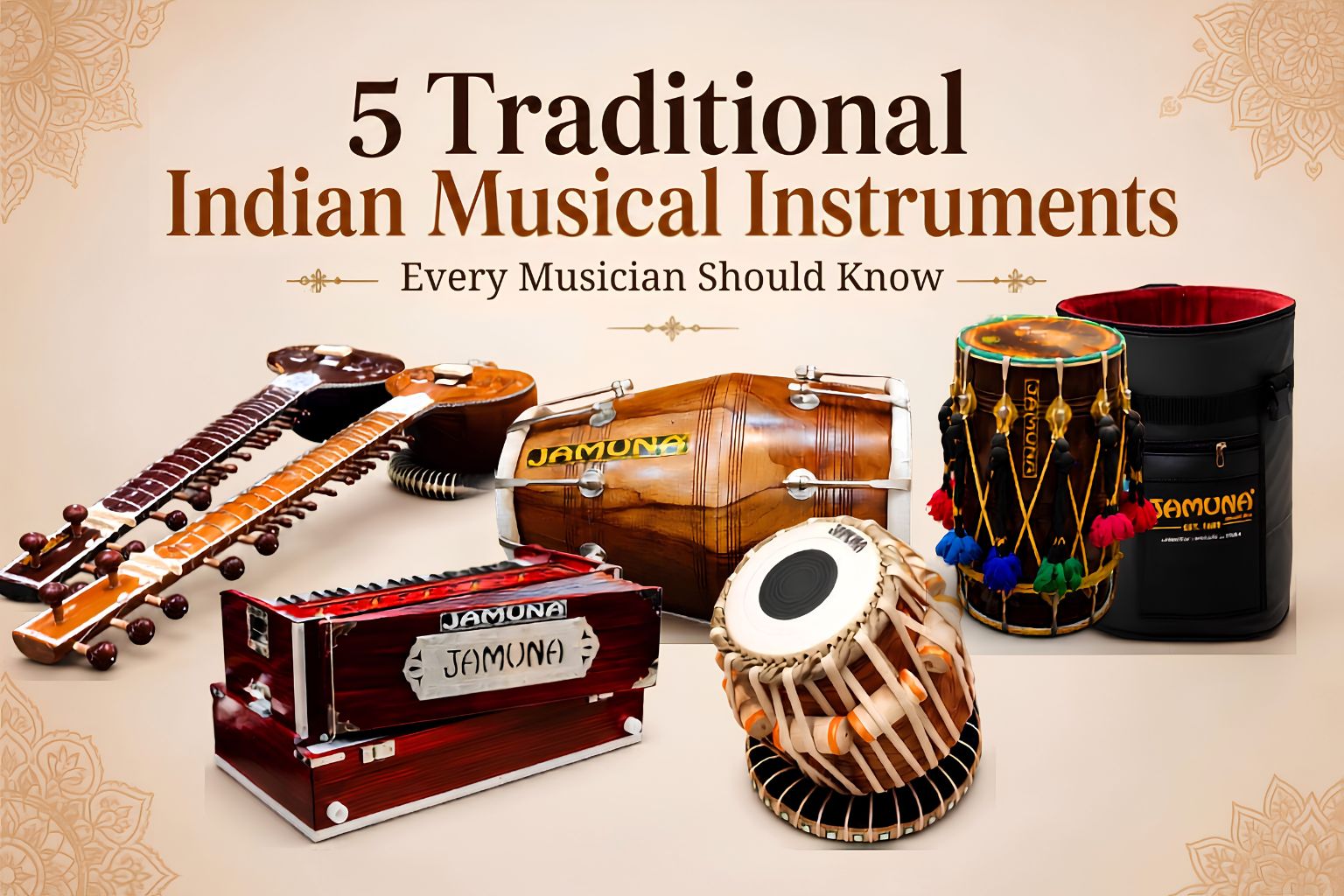
5 Traditional Indian Musical Instruments Every Musician Should Know
From classical performances to lively folk celebrations, music remains an important part of Indian culture. Indian Musical Instruments are known for their unique sounds, traditional craftsmanship, and cultural value. Many of these instruments are still widely used by professional musicians, beginners, and performers across the country.
Every Indian musical instrument has its own unique sound and role in a performance. While some are known for creating expressive melodies, others provide the rhythm and energy that bring music to life. Understanding these traditional instruments helps musicians appreciate the richness and diversity of India’s musical heritage. Whether your interest lies in classical music or folk traditions, these five instruments are excellent to explore.
1. Harmonium: Versatile Indian Classical Instrument
The harmonium is one of the most familiar instruments in Indian music. It is commonly used in Hindustani classical music, devotional singing, bhajans, qawwali, and stage performances. The instrument produces sound when air passes through its reeds as the musician operates the bellows and presses the keys.
Thanks to its user-friendly design, the harmonium is well suited for newcomers as well as skilled musicians. Many vocalists rely on it to develop accurate pitch and strengthen their singing practice. Some modern harmoniums also include features that make playing more convenient.

Why Musicians Prefer the Harmonium
The harmonium is popular for several reasons:
- It is relatively easy to learn.
- It produces stable, well-defined musical notes.
- It is widely used to accompany both singers and instrumental performances.
- It serves as an effective instrument for improving vocal training and pitch accuracy.
- It can be used in both traditional and modern performances.
For musicians looking for greater flexibility, a scale changer harmonium can be a useful choice. It allows the player to shift the pitch conveniently while maintaining the same fingering pattern. This feature can be especially helpful when accompanying singers with different vocal ranges.
2. Tabla: Essential Indian Percussion Instrument
The tabla offers a wide range of tones. Musicians use different finger and palm techniques to create complex rhythmic patterns. It plays an important role in Hindustani classical performances and is also used in devotional, folk, fusion, and contemporary music.

The Importance of Tabla in Indian Music
The tabla musical instrument is valued for its expressive rhythm and versatility. Skilled players can create both soft rhythmic patterns and powerful beats.
Some important features include:
- Different strokes produce distinct sounds.
- It supports complex rhythmic structures.
- It works well with vocal and instrumental performances.
- It can be played in solo performances.
- It is widely used in modern fusion music.
Learning tabla requires regular practice and a strong understanding of rhythm. With time, musicians can develop better timing, coordination, and control.
3. Dholak: Traditional Indian Folk Drum
The dholak is a popular hand-played drum found in many Indian folk and traditional music styles. It has a barrel-shaped wooden body with two drumheads. Each side produces a different sound, allowing musicians to create varied rhythmic patterns.
The dholak is commonly played during weddings, religious gatherings, folk performances, and cultural celebrations. It is also frequently heard in bhajans and regional music. Its warm and lively sound makes it an important part of many traditional musical groups.

What Makes the Dholak Special?
The dholak has a simple yet expressive design. It can create steady rhythms and energetic beats without requiring complicated equipment.
Dholaks made from premium sheesham wood are valued for their long-lasting construction, attractive grain, and warm, resonant tone. The quality of the wood and drumheads can influence the overall sound.
When choosing a dholak, musicians should consider:
• Wood quality
• Drumhead construction
• Size and weight
• Sound balance
• Comfort while playing
The dholak is an excellent option for musicians who enjoy folk music and traditional Indian performances.
4. Sitar: Iconic Indian String Instrument
The sitar is one of the most recognizable string instruments associated with Indian classical music. It has a long neck, movable frets, tuning pegs, and several strings. Its distinctive sound comes from the combination of playing strings and sympathetic strings.
The instrument is closely connected with Hindustani classical music. It has also gained international recognition through collaborations between Indian musicians and artists from different musical traditions.

Understanding the Sitar
Mastering the sitar takes dedication, patience, and regular practice over time. Players gradually build precision in handling the strings, movable frets, and various performance techniques. The instrument is capable of producing deep, emotional, and highly expressive melodies.
A sitar musical instrument can be used for:
- Classical performances
- Solo recitals
- Music education
- Cultural programs
- Fusion and experimental music
The quality of the wood, craftsmanship, strings, and overall construction can affect the instrument’s tone. For serious learners, choosing a well-made sitar is an important step toward developing a good playing technique.
5. Dhol: Powerful Traditional Celebration Drum
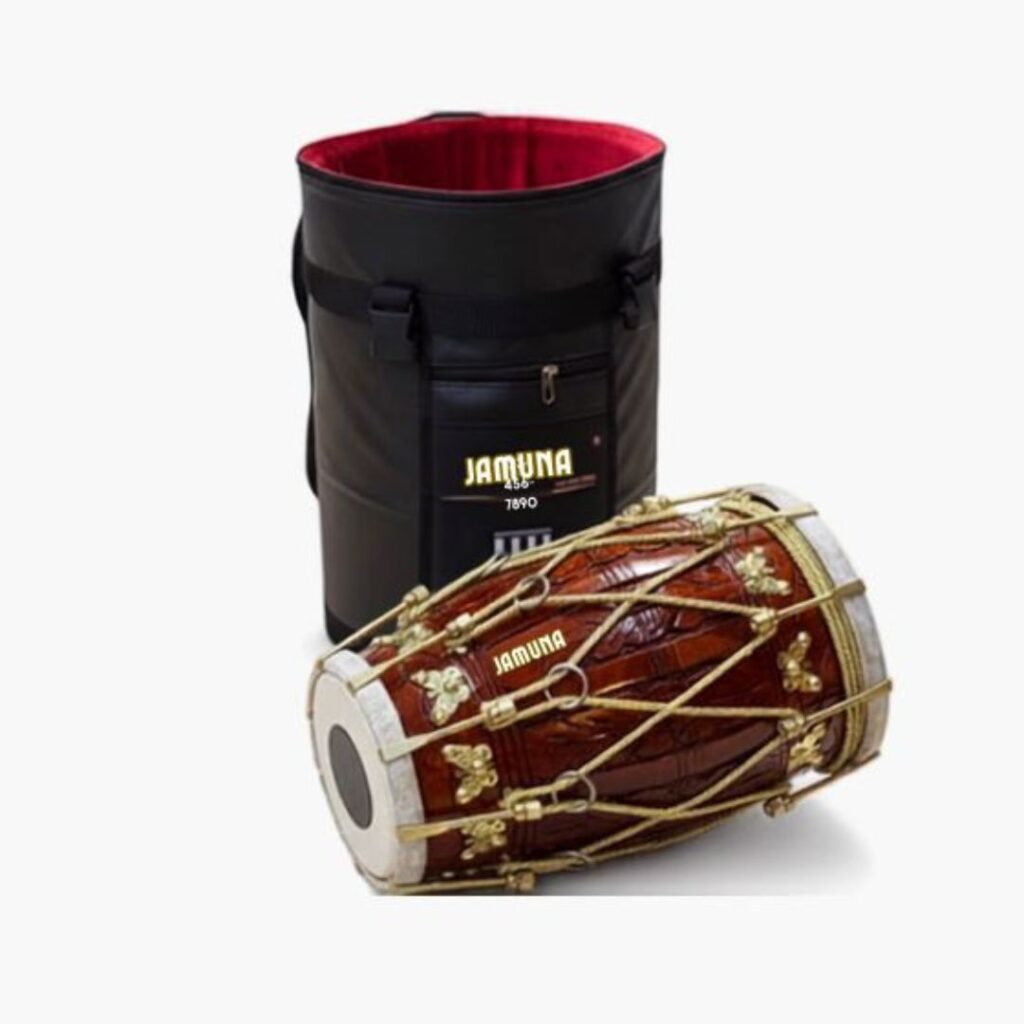
The dhol is a large traditional drum known for its loud and energetic sound. It is strongly associated with Punjabi folk music and celebrations. The instrument is often played during weddings, festivals, cultural events, and processions.
Compared with smaller hand-played drums, the dhol delivers strong, resonant beats that carry clearly across wide open spaces. Its energetic rhythm encourages people to dance and celebrate. Today, it is widely featured in contemporary Punjabi music and performances on stages around the world.
The Role of Dhol in Celebrations
The bhangra dhol is particularly popular for creating the energetic beats that define traditional Bhangra performances. Its powerful sound helps drive the rhythm and adds excitement to celebrations.
The dhol is commonly used for:
- Weddings
- Festivals
- Bhangra performances
- Cultural events
- Processions
- Stage shows
Playing the dhol requires strength, timing, and coordination. A skilled dhol player can control the intensity of the beats and create rhythms that bring an entire audience together.
How to Choose the Right Traditional Instrument
Choosing a musical instrument depends on your interests, musical goals, and preferred style. Each instrument offers a different learning experience.
Consider these points before making a decision:
- Think about your music style: Classical, folk, devotional, and contemporary music may require different instruments.
- Consider your experience: Beginners may prefer instruments that are easier to understand and practice.
- Check the build quality: Good materials and craftsmanship can improve durability and sound.
- Set a realistic budget: Prices can vary based on construction, quality, and features.
- Try before buying: If possible, listen to the instrument and test its comfort before making a purchase.
The right instrument should feel comfortable and inspire you to practice regularly.
Why Traditional Indian Instruments Still Matter
Traditional instruments continue to hold an important place in India’s musical landscape. They connect modern musicians with centuries of musical knowledge and cultural traditions.
These instruments are also finding new audiences. Many artists now combine traditional sounds with jazz, rock, electronic music, and other global genres. This has created new opportunities for classical and folk instruments in contemporary music.
Some important reasons for their continued popularity include:
- They preserve India’s musical heritage.
- They offer distinctive sounds.
- They support classical and folk music.
- They inspire modern musical experimentation.
- They connect younger generations with traditional culture.
Learning a traditional instrument can therefore be more than a musical journey. It can also be a way to understand India’s diverse cultural history.
Final Thoughts
Indian musical instruments preserve timeless traditions while inspiring modern creativity. Whether you’re beginning your musical journey or refining your skills, Jamuna Music offers authentic instruments that help you experience the rich heritage, craftsmanship, and lasting beauty of Indian music.